Making Game Night a Weekly Ritual That Actually Sticks
Published November 12, 2026. Last updated November 12, 2026.
It is dark before dinner is on the table. Nobody wants to go back outside. The default plan, in a lot of houses, becomes separate screens in separate rooms, and a whole evening passes under one roof without much time spent together. A standing game night pushes back on that drift, but only if it survives past the second week. The games are rarely the problem. The ritual around them is.
The plan below treats game night as a schedulable appointment with timed blocks, a short version for tired weeks, and a restart for the week that gets missed. It is built from two consistent findings in the guides that cover weekly routines: a fixed, recurring time beats scheduling case by case, and a small rotation of games the family already knows beats a shelf of new boxes that each need teaching.
The 75 minute plan, block by block
Pick the standing night first (the framework further down helps), then run the same shape every week. Timed blocks keep the evening from meandering, and the total sits well under the two hour mark that routine guides treat as a comfortable ceiling.
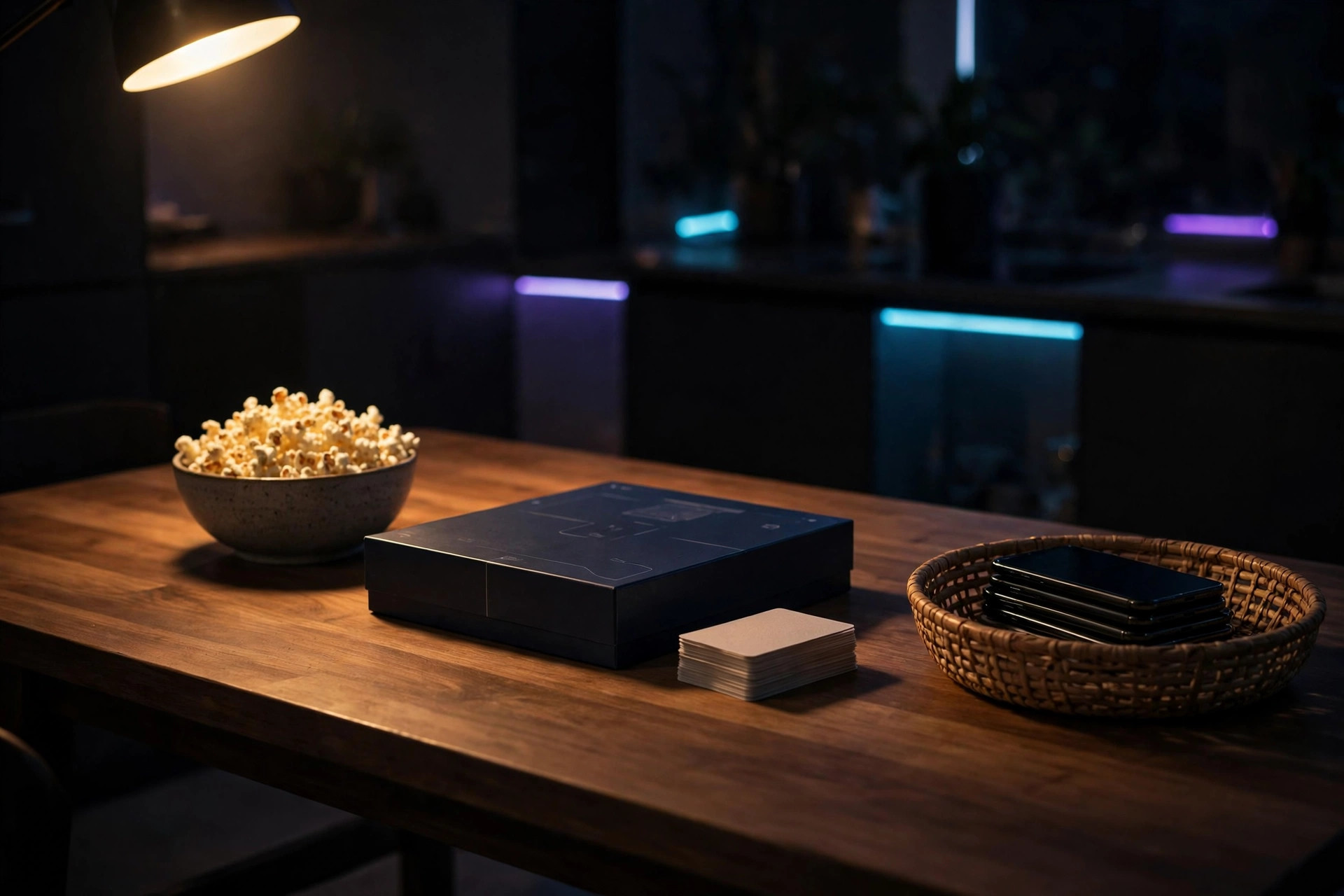
- Block 1, settle and set up, 5 minutes. Clear the table, put phones in a basket or another room, and set out the game the chooser picked. A deliberate change of space signals that the evening has started.
- Block 2, quick opener, 10 to 15 minutes. Play one short game everyone already knows, while the last person settles in. A round of 60 second household challenges in the Minute to Win It format works here, and so does any quick card game from the family shelf. No teaching in this block, ever.
- Block 3, main game, 40 to 45 minutes. The chooser of the week picks from the small rotation of two to four known games. Say the end time out loud at the start, so everyone can pace themselves.
- Block 4, close, 10 minutes. One short round of talk while the box gets packed: what worked, what to try next week, and who chooses next. Then the evening ends on time, with people still glad they came to the table.
What success looks like: the table is clear and the first game is open within five minutes of the start time, nobody teaches a new game, and the close happens before anyone drifts away. If all three happen, the plan worked, whatever the scores were.
The 30 minute fallback for a tired week
Some weeks arrive with late work, a sick kid, or a table of people who are simply tired. The fallback keeps the appointment and shrinks the evening instead of cancelling it.
- Minutes 0 to 5: table cleared, phones away, one game out of the box. Choose the shortest game in the rotation, the one that needs no teaching.
- Minutes 5 to 25: play that one game, once through. If energy lifts, play it again. If it does not, one finished game still counts.
- Minutes 25 to 30: pack up, name next week’s chooser, and stop. Ending while people still want more is a feature of a short night, not a failure of it.
Food stays simple on fallback weeks and on regular weeks alike: pizza, a pot of soup, or a tray of sandwiches, so nobody spends game night at the stove while everyone else plays. A snack that only appears on game night can help. It gives the evening a small signature that costs almost nothing.
Picking the night that survives your calendar
Work through these questions in order. The first night that passes all four is your standing night.
- Is the next morning forgiving? Friday earns its popularity because there is no school the next morning for many households. A night before an early start needs the fallback version as its default, not its exception.
- Is the evening already clear most weeks? A night that is free three weeks out of four beats a perfect night that collides with practice, shifts, or homework every second week. Sunday afternoon and a quiet weeknight both work for families whose Fridays are full.
- Can dinner be simple that day? If the standing night is also the night of the complicated family meal, the cook misses the games. Pair the ritual with the simplest dinner of the week.
- Does the time protect itself? Put the night on the family calendar as a recurring appointment and treat it like any other commitment. A ritual that needs a fresh decision every week will lose to whatever shouts loudest that day.
Two habits support whichever night wins. Keep the games visible and reachable, on a shelf where people live, not in a cupboard that needs a search. And rotate the chooser each week, with the chooser also picking the snack or setting the table if your family likes roles. Rotation answers the most common complaint about game night, that the same person always gets their way, and it gives each person a small ownership of the evening in turn.
The week you miss, and the restart
Misses are part of the design, not a breach of it. Holidays, illness, and late nights will interrupt the routine, and the standing advice from weekly routine guides is plain: skip the week and pick it back up. A habit survives a gap much better than it survives guilt. The restart is three steps.
- Name the return date out loud. At the moment the miss happens, say the next standing night and put it back on the calendar. A ritual with a named return date is paused. A ritual without one is quietly over.
- Restart with the fallback, not the full plan. The first night back runs the 30 minute version, with the most familiar game in the rotation. A short, easy win rebuilds the streak faster than an ambitious evening that falls apart.
- Let the flat night count. Some sessions will be flat, someone will be tired, and the game will not quite click. Routine guides make the same point in different words: the tradition is sustained by the average session, not the perfect one. A flat night that happened still beats a perfect night that was postponed.
One last piece of housekeeping: if rain or a storm closes the evening in, the plan holds indoors without changes. A guided list scavenger hunt, where a host reads one item at a time and hunters find and return it before the next item is called, fits the opener block on a night when nobody wants a board on the table at all. The ritual was never about the specific game. It is about the same people, at the same table, at the same time next week.
, Grace Okafor, Family & Parenting Writer